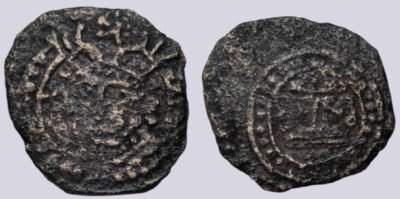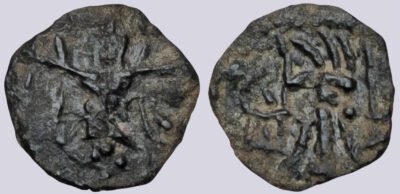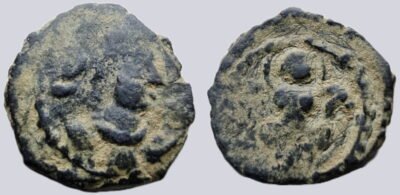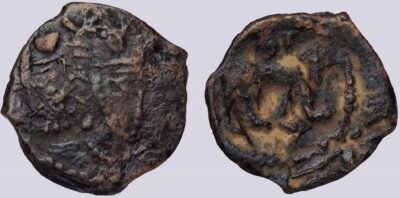


Hunnic Clay Sealing. Hephthalites. 5th cent. AD
$699
Impressive Hephthalite Sealing!
In stock
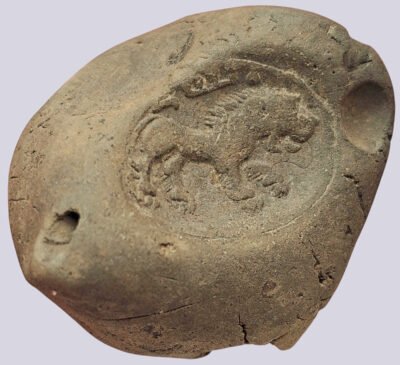
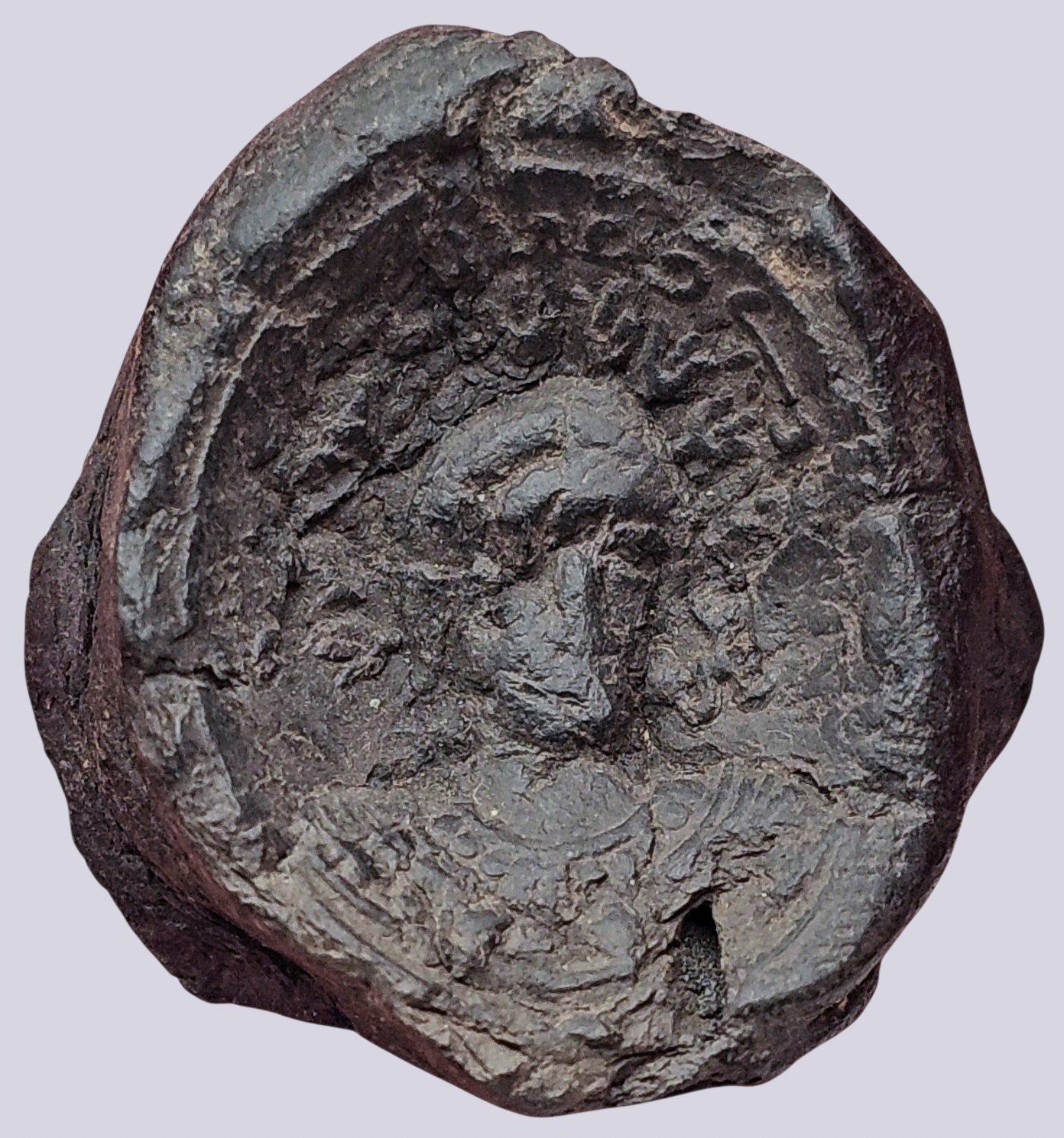
Iranian Huns. Hephthalite Clay Sealing (5th–6th cent. AD)
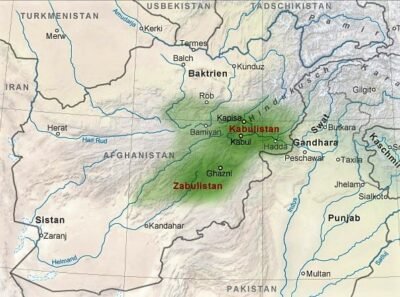
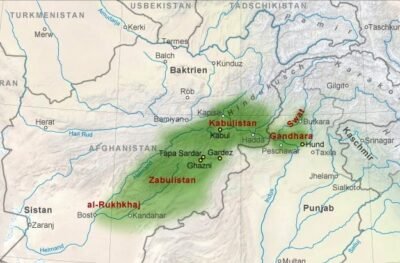
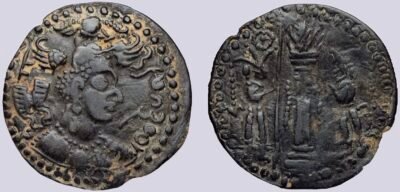
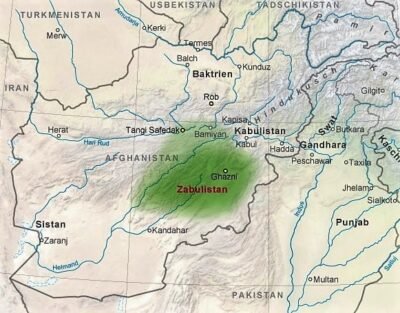
The Hephthalites (also known as the White Huns) were a powerful group of Iranian Huns who ruled over Central Asia, Afghanistan, northern India, and parts of Iran during the 5th–6th centuries AD. They played a crucial role in the decline of the Sasanian Empire and the fragmentation of the Gupta Empire in India
Material and dimensions: сlay, 10.74 g, 17 x 32.5 mm
Function: Likely used to seal official documents, goods, or correspondence in trade and administration
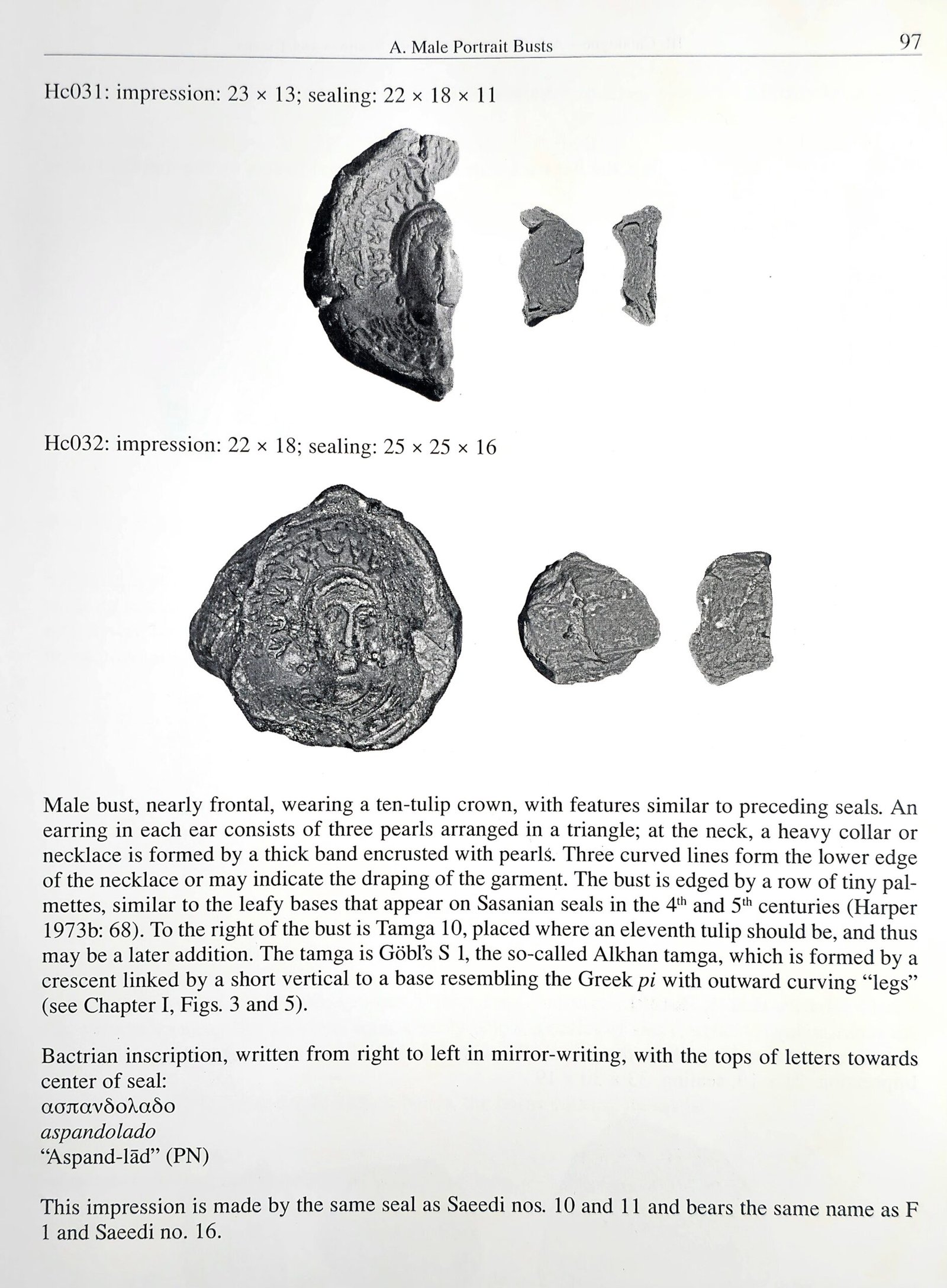
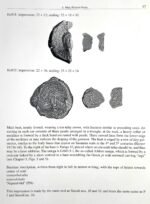
Iconography: Male bust, nearly frontal, wearing a ten-tulip crown. An earring in each ear consists of three pearls arranged in a triangle; at the neck, a heavy collar or necklace is formed by a thick band encrusted with pearls. Three curved lines form the lower edge of the necklace or may indicate the draping of the garment. The bust is edged by a row of tiny palmettes, similar to the leafy bases that appear on Sasanian seals in the 4th and 5th centuries AD.
To the right of the bust is Tamgha 10, placed where an eleventh tulip should be, and thus may be a later addition. The Tamgha is Gobl’s S 1 the so-called Alkhan tamgha, which is formed by a crescent linked by a short vertical to a base resembling the Greek pi with outward curving “legs”. Bactrian inscription, written from right to left in mirror-writing, with the tops of letters towards center of seal: “Aspand-lād”
VF. Extremely RARE
References: Z-339091 (this item)
Featured in “Seals, Sealings and Tokens from Bactria to Gandhara (4th to 8th century CE)” by Judith Lerner & Nicholas Sims-Williams, page 97
♦Please, note that our prices are ALL-INCLUSIVE. No additional fees (such as Buyer’s Premium, PayPal commission, etc.) are applicable♦